LinkedIn recommendations are the original social proof. They're testimonials with built-in verification — anyone can click the recommender's profile to confirm they're real.
But most LinkedIn recommendations are generic and forgettable. "Great to work with. Highly recommend."
The best recommendations are specific, tell a story, and make you want to work with that person immediately.
Here's what that looks like — plus templates you can use to write better recommendations (and request them).
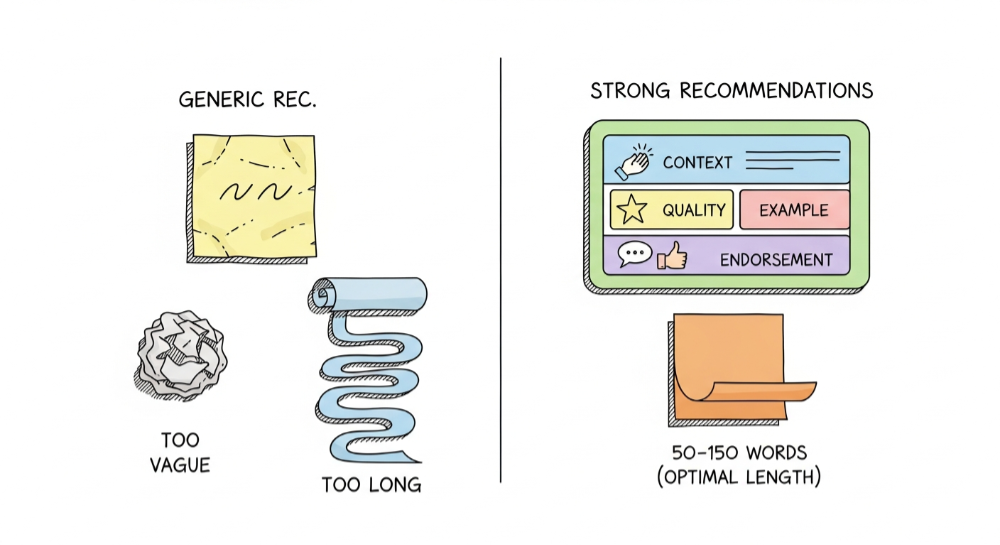
What Makes a Great LinkedIn Recommendation?
1. Specific Context
Where did you work together? What was the project/relationship?
2. Concrete Examples
What specifically did they do? What was the outcome?
3. Professional Qualities
Not just "nice" — what makes them effective?
4. Clear Endorsement
Who should work with them? Would you again?
The Formula
"I [context]. [Name] stood out because [specific quality]. Example: [concrete situation]. If you're [target], [endorsement]."
Recommendations by Relationship Type
For a Colleague (Peer)
Example 1 — Project Partner:
I worked with Sarah on our Q3 product launch, and she made a complex project look effortless. When we hit unexpected technical issues two weeks before launch, she didn't panic — she reorganized the timeline, looped in the right people, and we launched on time. What I remember most: she stayed calm when the rest of us were stressed. Any team would be lucky to have her.
Example 2 — Cross-Functional Collaborator:
Marcus and I collaborated on multiple marketing campaigns over two years. What sets him apart: he actually listens. Too many marketers push their agenda. Marcus asked questions, understood our sales challenges, and created content that actually moved deals forward. Our conversion rate improved 40% on campaigns he led. If you need a marketer who understands the full funnel, this is your person.
Template:
I [worked with/collaborated with] [Name] on [project/team/initiative]. What stood out was [specific quality]. For example, [concrete situation and outcome]. [Endorsement for who should work with them].
For a Direct Report
Example 1 — Star Performer:
I managed Jennifer for three years, and she was consistently the highest performer on our team. But what made her special wasn't just output — it was how she elevated everyone around her. She mentored junior team members, created documentation that saved hours of onboarding, and proactively identified process improvements. When she told me she was ready for a leadership role, I wasn't surprised. I'd hire her again in a heartbeat.
Example 2 — Growth Journey:
David joined my team as a junior analyst with raw talent and a lot to learn. Two years later, he was running projects independently and training new hires. What impressed me: he sought feedback relentlessly and actually implemented it. He turned his biggest weakness (presentation skills) into a strength. Any manager would be fortunate to help shape his continued growth.
Template:
I managed [Name] for [duration] as [their role]. What impressed me most was [specific quality or growth]. [Concrete example]. [Endorsement + would you work together again].
For a Manager/Boss
Example 1 — Supportive Leader:
Reporting to Lisa was a career highlight. She's the rare leader who makes you better without micromanaging. She gave me the autonomy to own projects while being available when I needed guidance. Her feedback was always specific and actionable. One example: she noticed I was struggling with stakeholder management and set up practice sessions before key meetings. That skill now defines my career. If you have the chance to work for Lisa, take it.
Example 2 — Strategic Thinker:
Michael taught me more about business strategy in two years than my MBA did. He has a gift for simplifying complexity and helping teams see the bigger picture. Even when we missed targets, he led with curiosity, not blame. Under his leadership, our department grew 3x while maintaining team morale. I'd follow him anywhere.
Template:
I reported to [Name] for [duration] as [your role]. What made them exceptional was [specific leadership quality]. [Example of how they helped you grow]. [Endorsement].
For a Client (B2B Services)
Example 1 — Agency Relationship:
We hired Chen & Co to redesign our brand identity. From day one, they understood what many agencies miss: we needed a partner, not a vendor. They pushed back on bad ideas (including ours), presented options we hadn't considered, and delivered work that exceeded the original brief. The rebrand launched on time and under budget. We've since hired them for three more projects. That says everything.
Example 2 — Consultant:
Emma consulted for our sales team for six months. In that time, she restructured our entire outreach process, trained the team on new methodologies, and created playbooks we still use. Results: 40% increase in response rates and a significantly shorter sales cycle. She doesn't just advise — she implements. If you need someone who delivers outcomes, not just recommendations, Emma is exceptional.
Template:
We hired [Name/Company] for [project/service]. What set them apart was [specific quality]. [Concrete result or example]. We've [worked with them again / would highly recommend] because [reason].
For a Freelancer
Example 1 — Ongoing Partnership:
I've worked with Alex on content projects for two years. In that time, she's become an extension of our team. Her writing is consistently on-brand, requires minimal editing, and she always hits deadlines. More impressively, she proactively suggests topics based on what's working — not just waiting for assignments. Finding a freelancer this reliable is rare. Don't let her calendar fill up.
Example 2 — Project-Based:
James built our company website in three weeks. Not only was the timeline aggressive, but he handled our constant scope changes with patience and professionalism. The site launched without a single bug. When we had issues months later, he responded within hours. For any web development project, James is my first call.
Template:
I hired [Name] for [specific project/ongoing work]. They delivered [quality + timeliness]. What stood out: [specific quality or example]. I [have continued working with them / would hire again immediately] for [type of work].
For a Vendor/Service Provider
Example 1 — Software Vendor:
We implemented [Product] eight months ago, and the support team — especially Patricia — made all the difference. She personally handled our onboarding, anticipated integration challenges, and checked in after launch to ensure adoption. That level of care is rare from software vendors. The product is great, but the support made us loyal customers.
Example 2 — Service Provider:
Robert handled our office move, and I can't overstate how smooth it was. Moving 50 people with zero downtime seemed impossible — he made it happen. He thought of details we'd missed, coordinated with our IT team seamlessly, and stayed late on moving day to ensure everything worked. When we expand, he'll be our first call.
Template:
We worked with [Name] for [service]. They [delivered outcome] in a way that [exceeded expectations]. [Specific example of going above and beyond]. I would recommend them to anyone needing [service type].
How to Request LinkedIn Recommendations
The Direct Ask
"Hi [Name],
Would you be willing to write me a LinkedIn recommendation? It would help as I [pursue new opportunities / build my profile / grow my consulting practice].
If it helps, here are a few things you might mention:
- [Specific project you worked on together]
- [Particular skill or contribution]
- [Result or outcome]
No pressure if you're too busy — I completely understand.
Thanks,
[Your name]"
The Reciprocal Approach
"Hi [Name],
I'd love to write you a LinkedIn recommendation — your [specific quality or contribution] really stood out when we worked together.
If you're open to it, I'd also appreciate one from you. Happy to go first!
[Your name]"
The Follow-Up Prompt
"Hi [Name],
Just checking if you had a chance to think about the LinkedIn recommendation? I know things get busy.
If it helps, even 2-3 sentences about [specific project or quality] would be perfect.
Thanks again,
[Your name]"
Common Mistakes to Avoid
Being Too Generic
❌ "Great to work with. Highly recommend."
✅ Include specific projects, qualities, and outcomes.
Being Too Short
❌ "Sarah is talented and professional."
✅ Add context, examples, and endorsements.
Being Too Long
A recommendation should be 50-150 words. Respect the reader's time.
Forgetting the Context
Start by establishing how you know the person. Without context, the recommendation lacks credibility.
Over-the-Top Praise
"Best person I've ever worked with" reads as insincere unless backed by specifics.
Templates for Any Situation
Universal Structure
[Context — how you worked together]
[Specific quality that stood out]
[Concrete example or result]
[Clear endorsement for who should hire/work with them]
Short Version (50 words)
I worked with [Name] on [project]. They consistently [quality] and [outcome]. [Example]. I'd work with them again without hesitation.
Standard Version (100 words)
[Context]. What sets [Name] apart is [quality]. During [project], they [specific action] which resulted in [outcome]. This wasn't a one-time thing — it's how they operate. If you're looking for someone who [key skill/quality], [Name] is exceptional. I'd recommend them without reservation.
Detailed Version (150 words)
I [worked with/managed/hired] [Name] for [duration/project]. In that time, I saw them [quality 1] and [quality 2] consistently.
One example: [specific situation + their action + outcome].
What I remember most: [memorable quality or moment].
[Name] would be an asset to any team that values [relevant quality]. I'd [work with them again / hire them again / recommend them] without hesitation.
Generate LinkedIn Recommendations
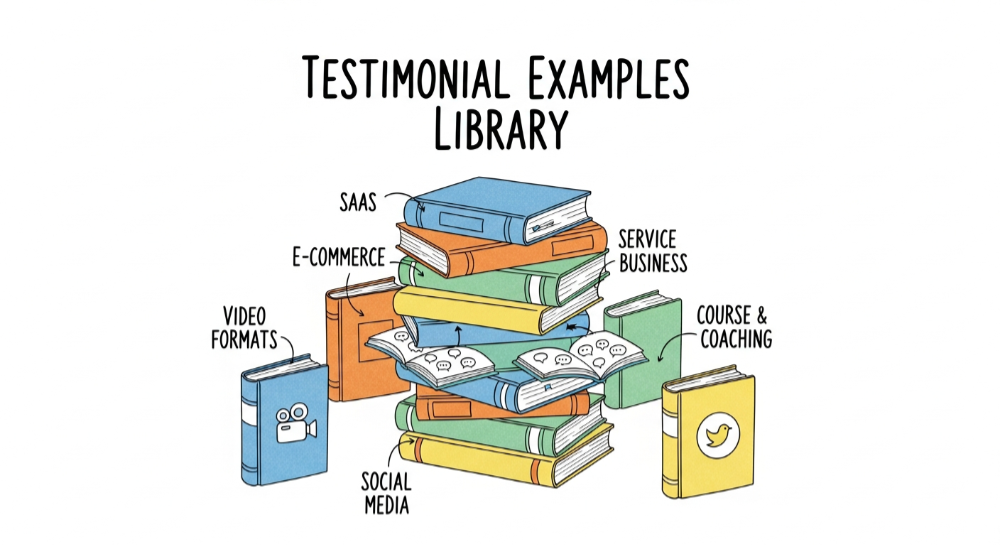
Use our free Testimonial Examples Generator to create LinkedIn recommendation templates based on your relationship type and industry.
Start collecting Testimonials with Say About Us on the free plan — no credit card required.
 Ask ChatGPT
 Ask Claude
 Ask Perplexity
 Ask Grok